Designed a 0→1 AI-powered food tracking mobile app
Task
Eliminate logging fatigue and provide accurate nutrition tracking for multicultural and home-cooked meals to drive daily habit formation.
-
Role
Founding Designer, Product Designer, UI Designer, UX Researcher
-
Team
Engineering, Product Manager, Co-founders
-
Tools
Figma, Miro, Abobe Illustrator, Gemini, UXPilot
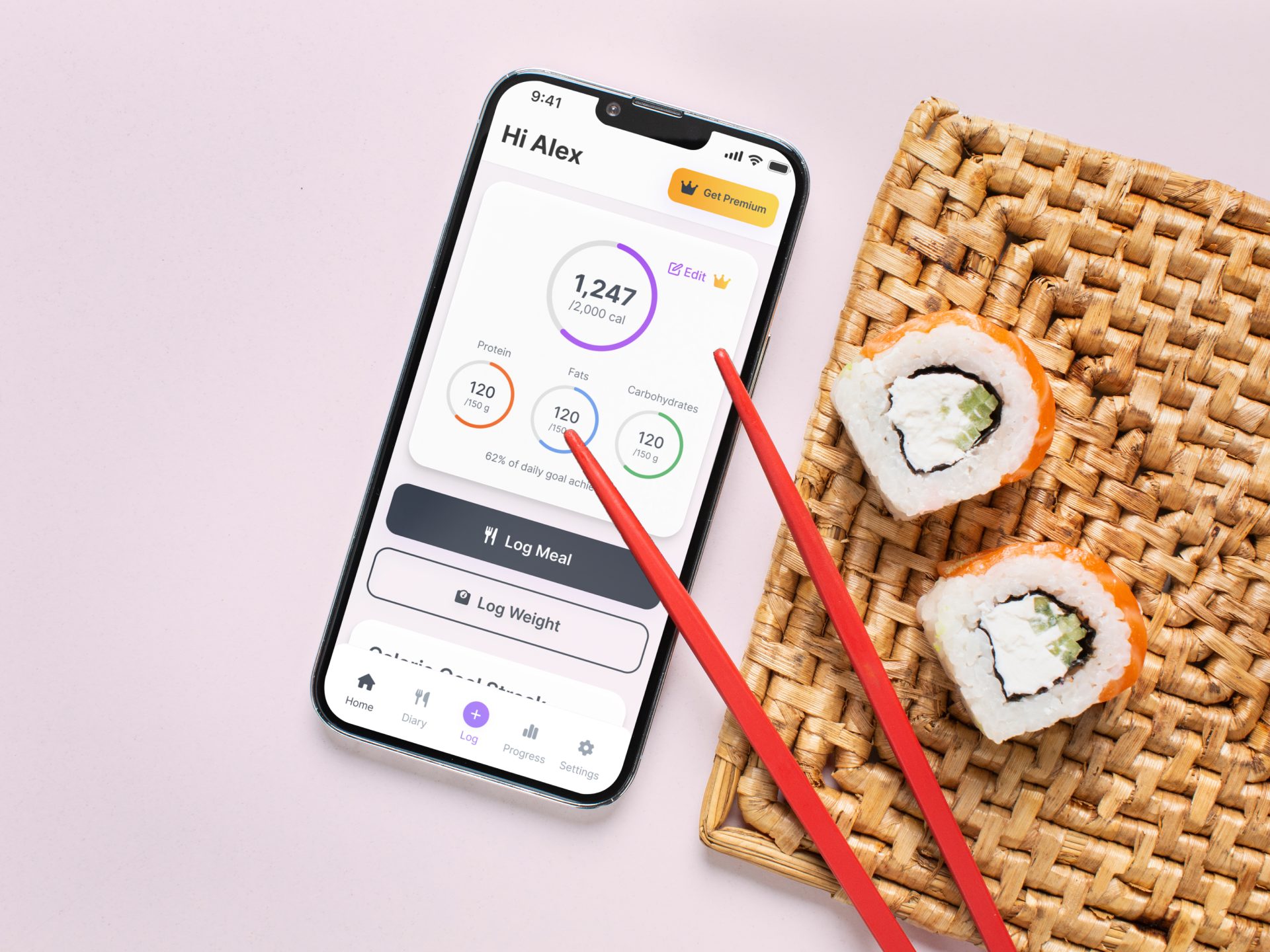
Case Study
Gourmet Glow is an AI-powered food tracking app designed to help health-conscious individuals achieve their fitness goals through effortless nutrition logging. While many users are motivated to track their meals, the friction of manual data entry and a lack of support for culturally diverse, home-cooked meals often lead to “logging fatigue” and high drop-off rates.
This project focused on transforming the tracking experience into a habit by introducing AI scanning and personalized macro guidance to improve daily engagement and long-term retention.
Problem
Nutrition apps create logging fatigue through tedious manual entry and a lack of support for multicultural, home-cooked meals. This causes users quickly lose motivation and abandon their tracking habits.
Goal
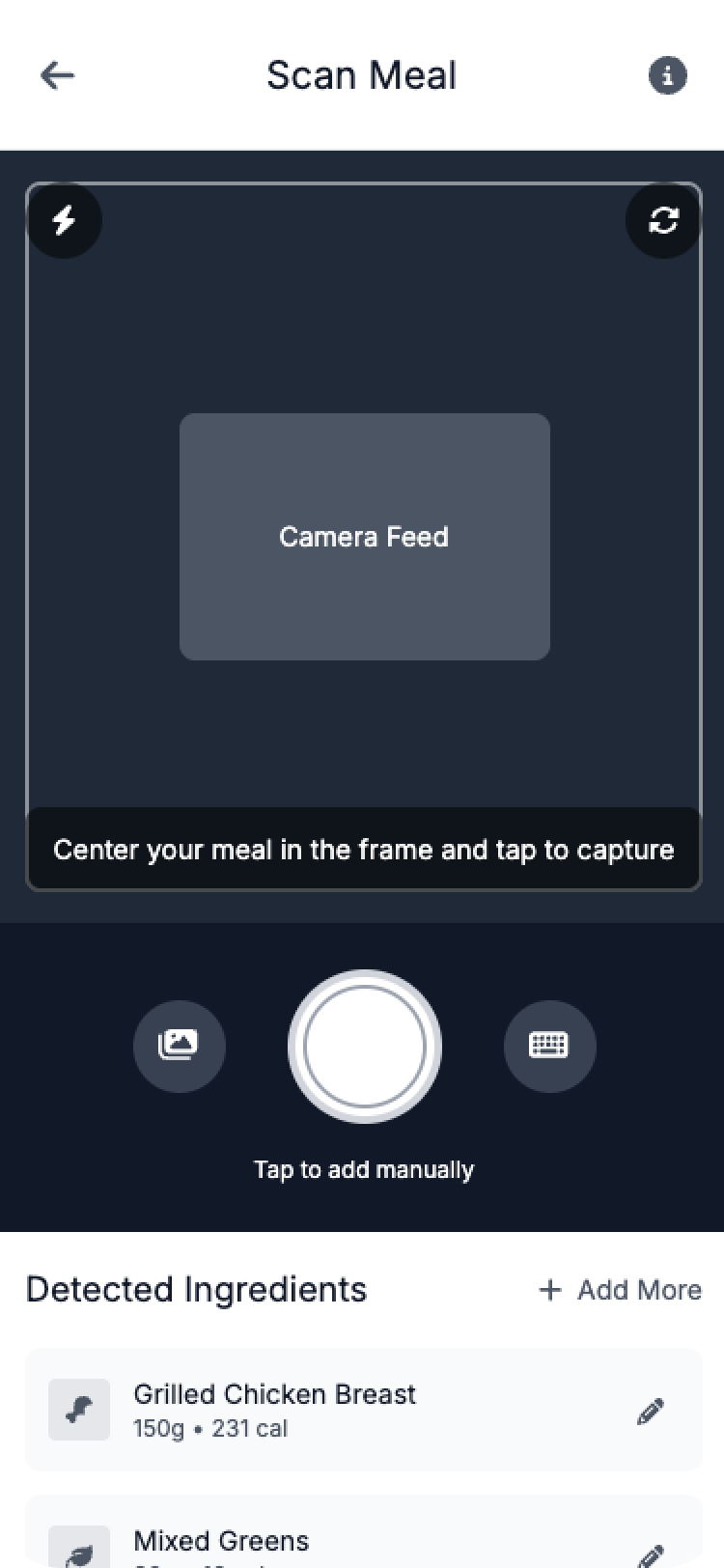
To launch a 0 → 1 AI-powered platform that eliminates tracking friction by utilizing intelligent meal scanning and personalized macro guidance.
Target Audience
The product is designed for three primary user groups:
- Busy Professionals: High-performers (ages 25–45) who value efficiency and need fast, data-driven tracking to fit their active lifestyles.
- Goal-Oriented Beginners: Individuals starting a fitness journey who require simple, automated tools to stay consistent without feeling overwhelmed.
- Global Indian Expats: Individuals living abroad whose traditional, home-cooked diets are poorly represented in Western-centric apps, creating a barrier to accurate tracking.
Success Metrics
We achieved…
78%
Task success rate for logging Indian meals via AI scanning
63%
Decrease in time taken to log a meal compared to text-search apps
4.3/5
Average AI trust rating, with manual override features
Contents
Research
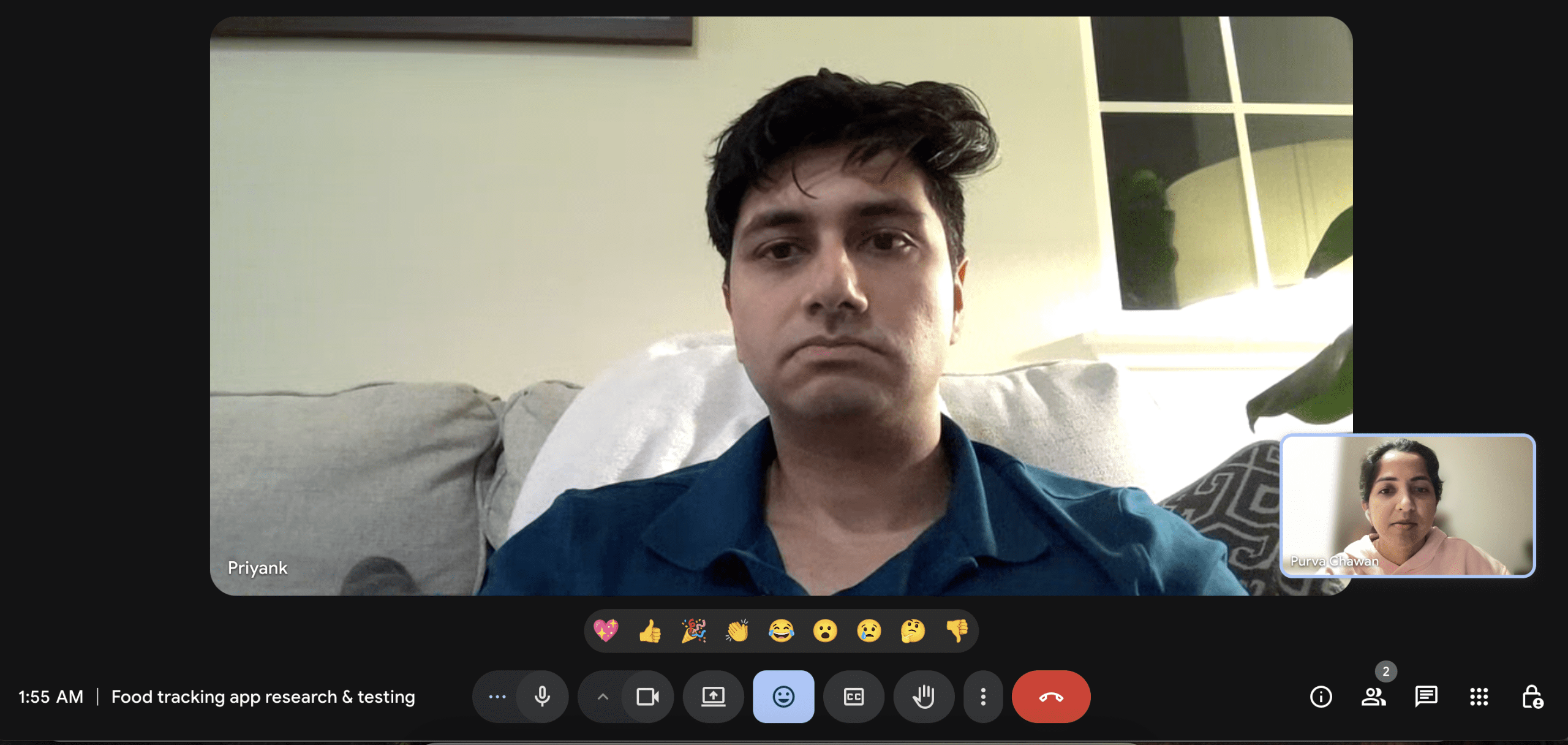
To better understand user needs and validate assumptions, I conducted both primary and secondary research.
To validate the need for a simplified tracking experience and identify market gaps, I conducted a mix of primary and secondary research.
Primary Research
I conducted surveys and deep-dive user interviews to understand the emotional barriers to calorie tracking and the specific frustrations of Indian users.
Competitor Analysis
I analyzed MyFitnessPal, CalAI, and BitePal, identifying a significant UX gap: most tools are Western-centric and lack the intuitive AI-scanning speed required to prevent user drop-off.
Usability Testing
Using interactive Figma prototypes, I performed testing to evaluate the AI-scanning flow, progress metrics and macro-dashboard, revealing critical areas for inclusion and simplification in the experience.
Strategic Pivot
Secondary market research provided by partners showed that resources were better spent on a superior, lean food logging MVP rather than a complex meal-planning feature, leading to a focused product roadmap.
Pain Points
Users felt overwhelmed by the high cognitive load required to maintain a consistent tracking habit. Foundational research identified that manual entry felt like a “second job,” especially for multicultural and home-cooked meals that lacked accurate database representation. While users desired better health and control, they frequently experienced logging fatigue due to repetitive inputs.
Research Findings
The research phase provided deep qualitative and quantitative insights that directly shaped Gourmet Glow’s 0 → 1 product strategy.
70%
of interviewees cited missing cultural food as the primary reason they abandoned previous apps like MyFitnessPal.
66%
of users expressed AI Hesitancy. Few users stated they would only trust AI logging after manually verifying the first few scans themselves.
84%
of consumers cook at home to control their diet. There is a critical need for a tool that handles complex, home-cooked meals.
15 min
daily average time taken for experienced users to manually log food even with repetitive meals.
61%
users discontinue usage of diet apps within the first 60 days. The #1 cause of abandonment is Tracking Fatigue.
Qualitative Insights
The "Indian Food Gap" & Cultural Inclusivity
Foundational research revealed a critical market gap: current leaders like MyFitnessPal and CalAI are primarily tailored to Western diets.
Database Frustration: Users noted that tracking Indian food is difficult because it requires finding a “closest match” rather than an exact entry.
Psychology of Motivation: Control vs. Guilt
Interviews highlighted a strong emotional link between tracking and user confidence.
Empowerment Through Data: Seeing progress charts helps users map their actions to results. As one participant noted, “I feel more in control now. I used to think it was genetics”.
The AI Trust Barometer
While AI-powered scanning was identified as a key differentiator, user trust varied significantly.
Trust Through Testing: Few users expressed a “trust but verify” attitude, stating they would only fully rely on AI scanning after testing it for accuracy themselves.
Strategic Pivot Points
While there was high interest in meal planning, market research indicated that the strongest MVP path was to master the core food logging and scanning experience.
Metric Preferences: There was a clear preference for macro tracking over simple calorie counting, especially for users focused on muscle gain.
Key Takeaways
The research suggested we needed to:
- Solve for "Logging Fatigue"
- Prioritize Cultural Accuracy
- Design for Psychology, Not Just Utility
- Empower Through Macro Clarity
- Build Trust with AI Transparency
- Maintain MVP Focus
Using AI For Design
I used AI tools to accelerate my workflow and spark early design direction. After gathering requirements, I used Gemini to conduct deep research for a better understanding and for synthesising user research data.
I explored initial ideas using Gemini and UXPilot to test design patterns across different areas of the product.
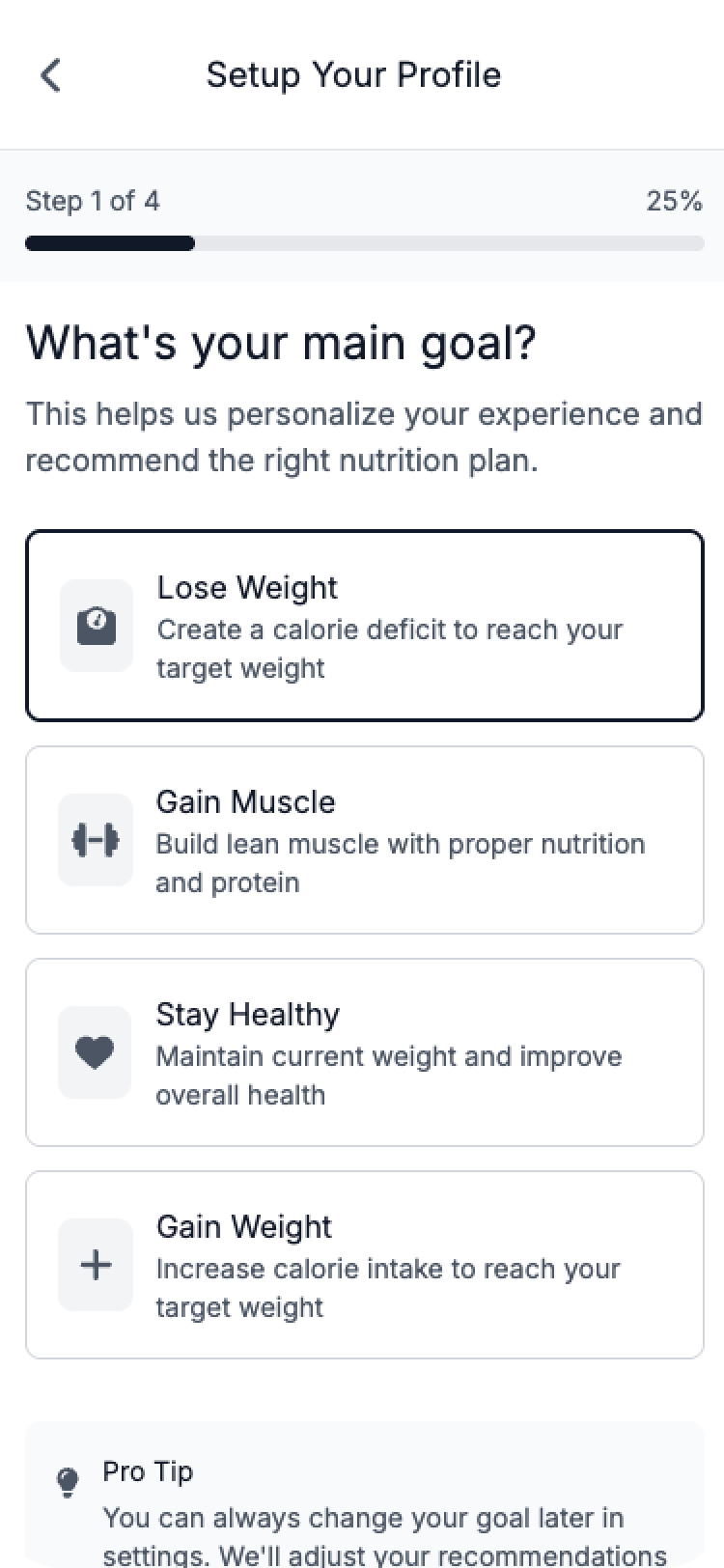
I then used these insights to create custom wireframes based on the most effective solutions.
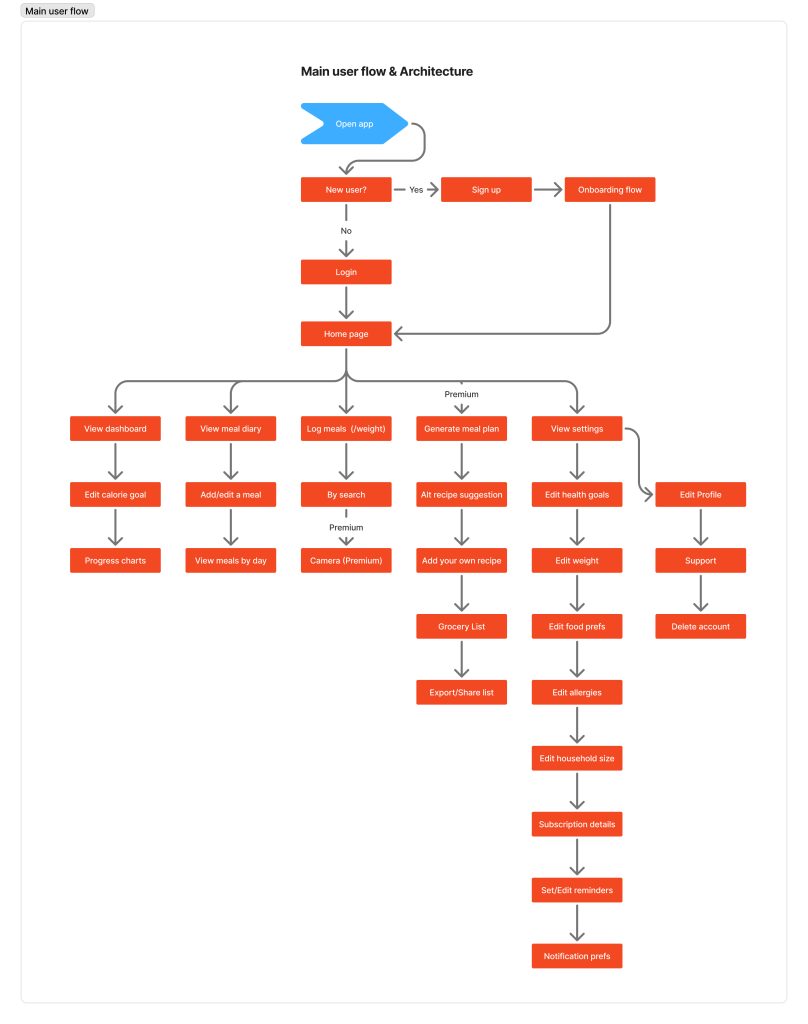
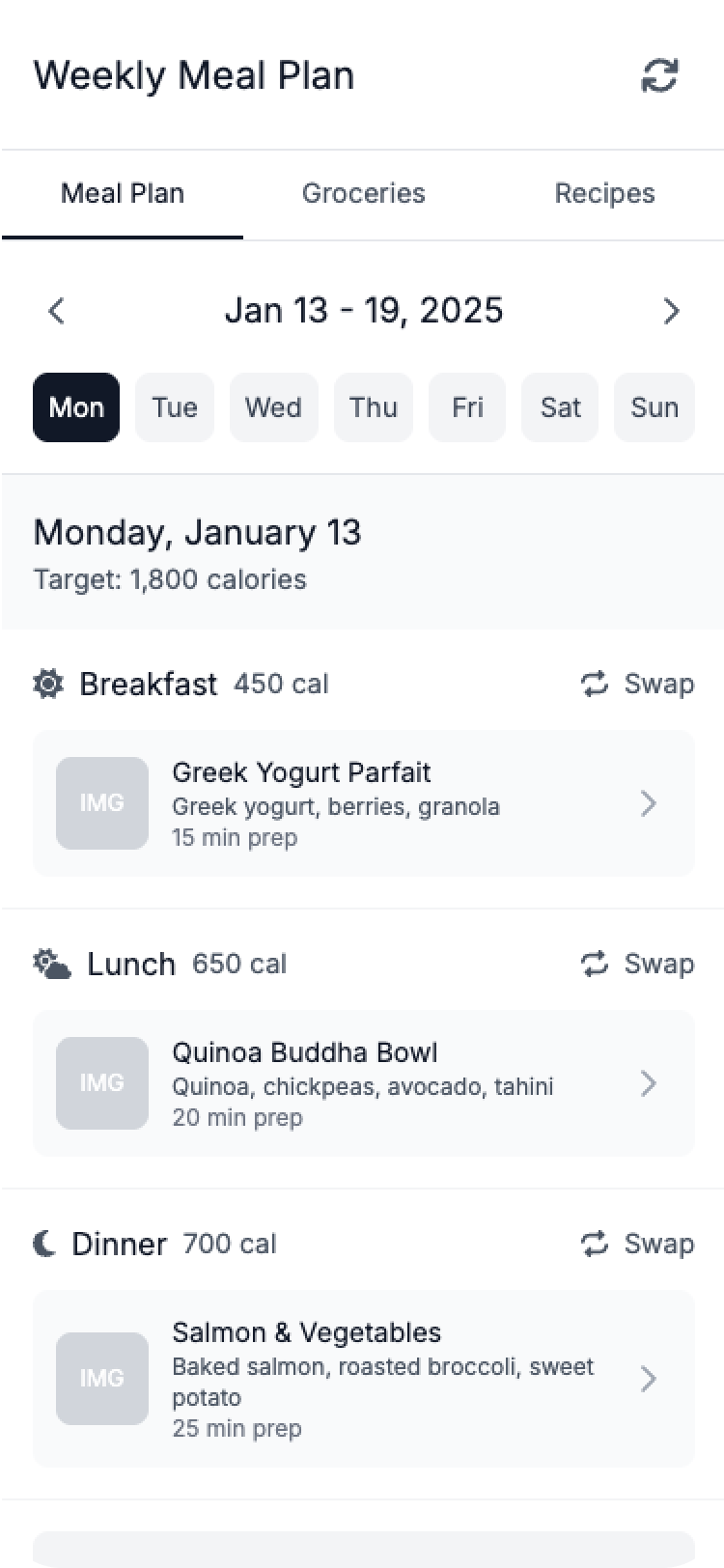
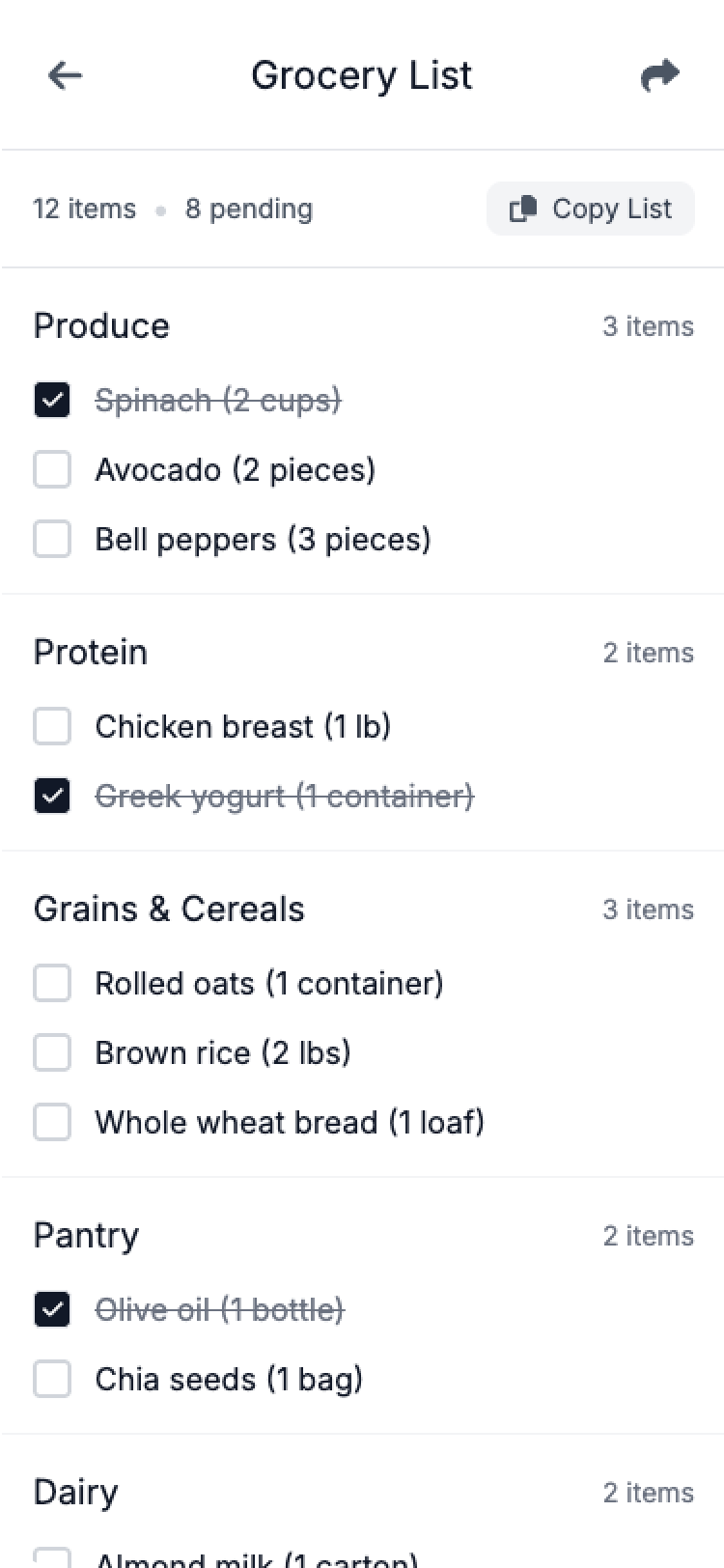
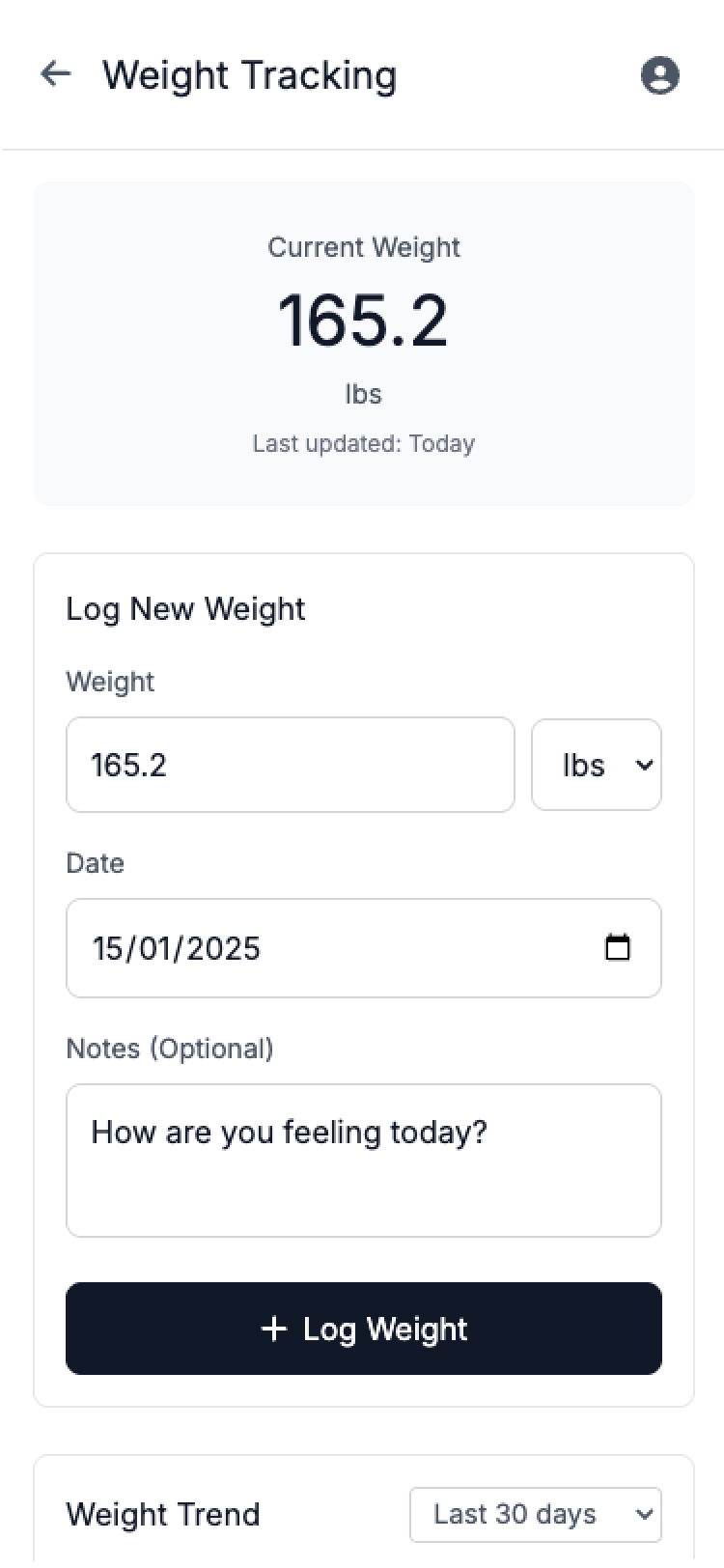
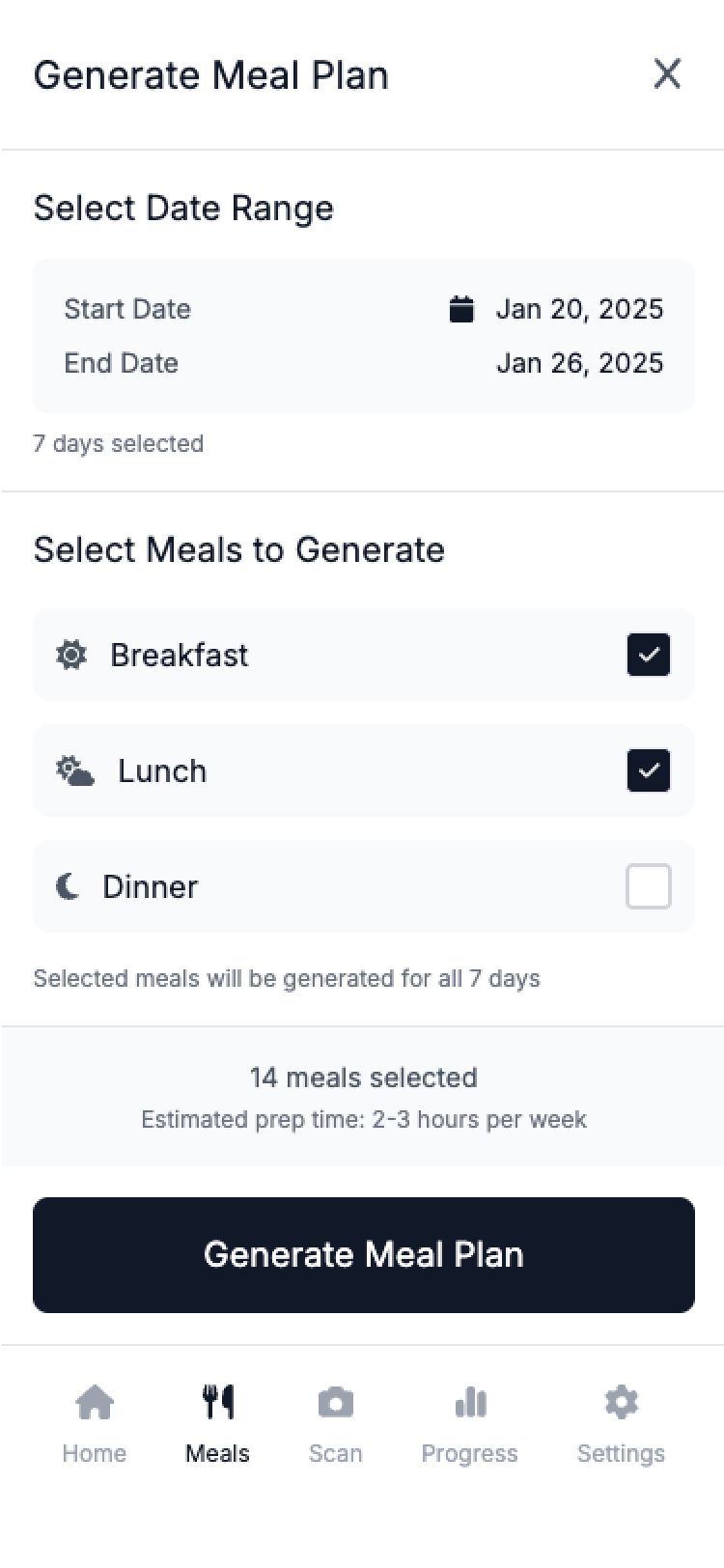
Inital User Flow
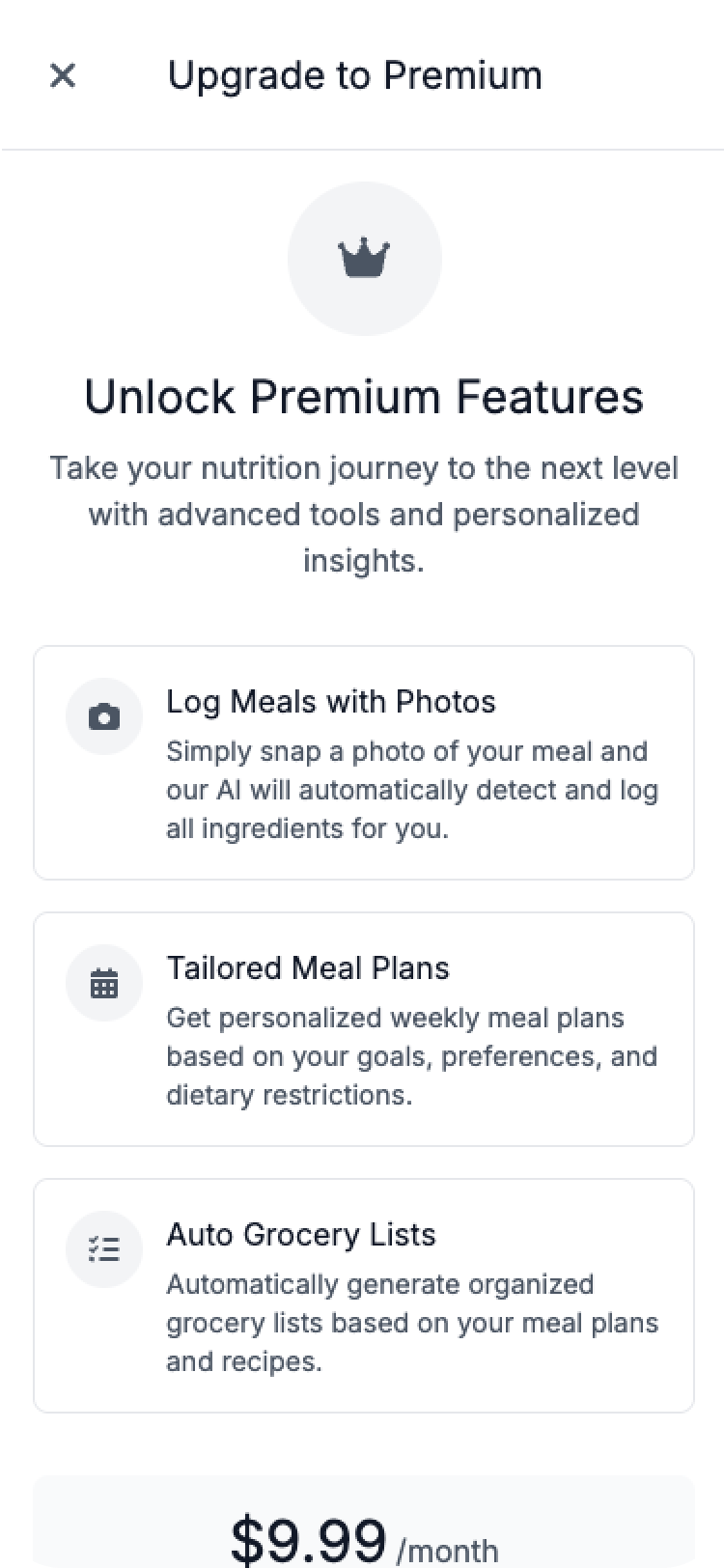
In the early discovery phase, I mapped out a comprehensive user flow that combined AI food logging with automated meal planning and grocery list generation. The goal was to create a closed-loop system where users could track, plan, and create a shopping list in a single workflow.
This helped visualize the full product potential before we used market research to narrow our focus.
Wireframes
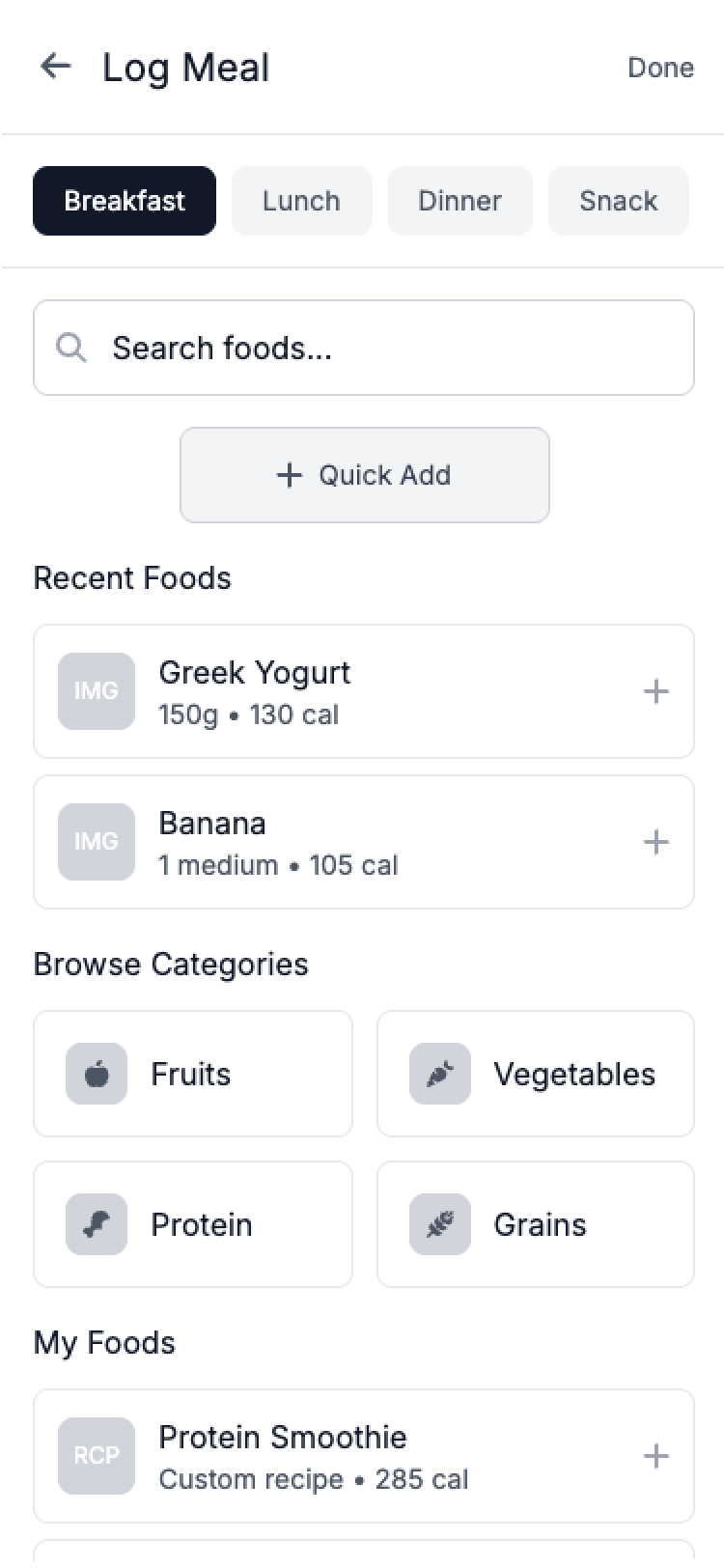
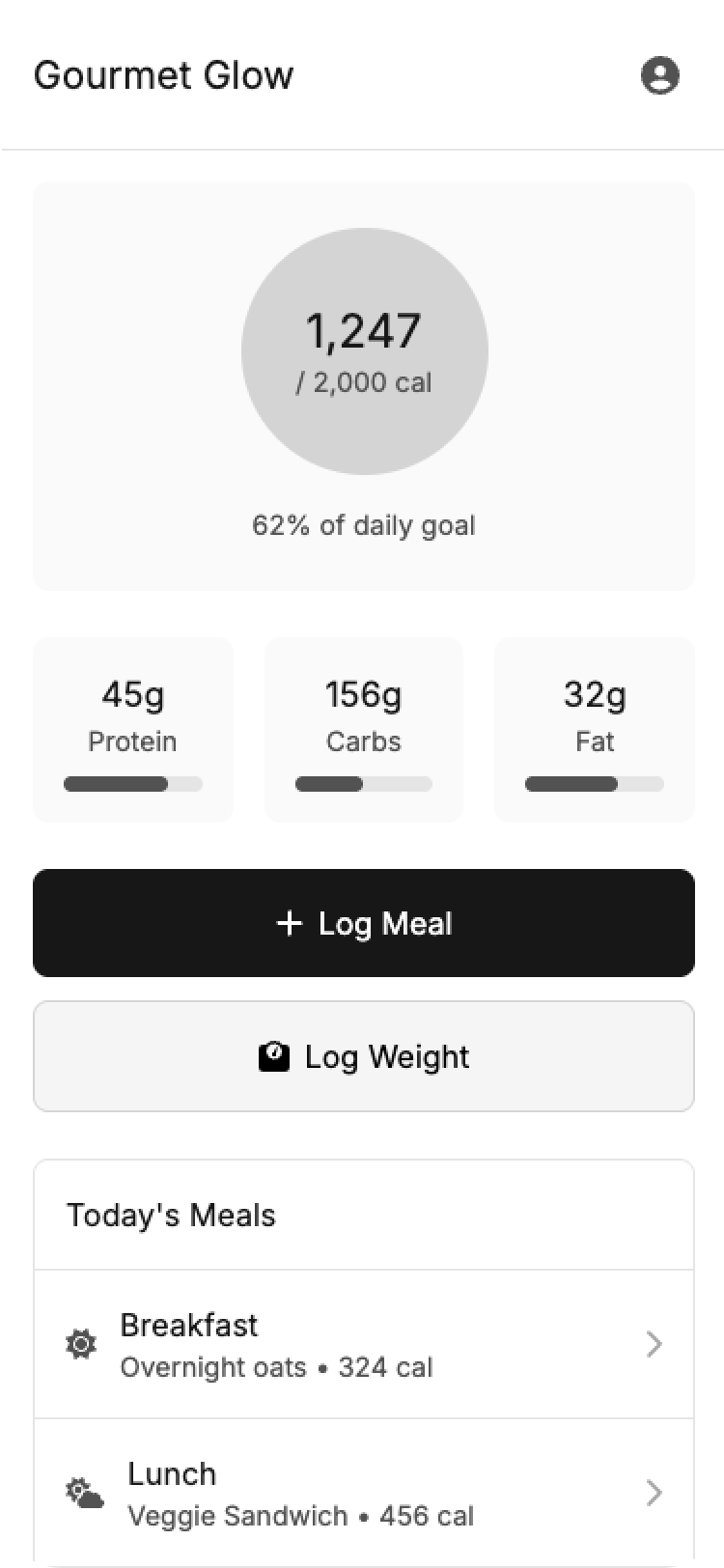
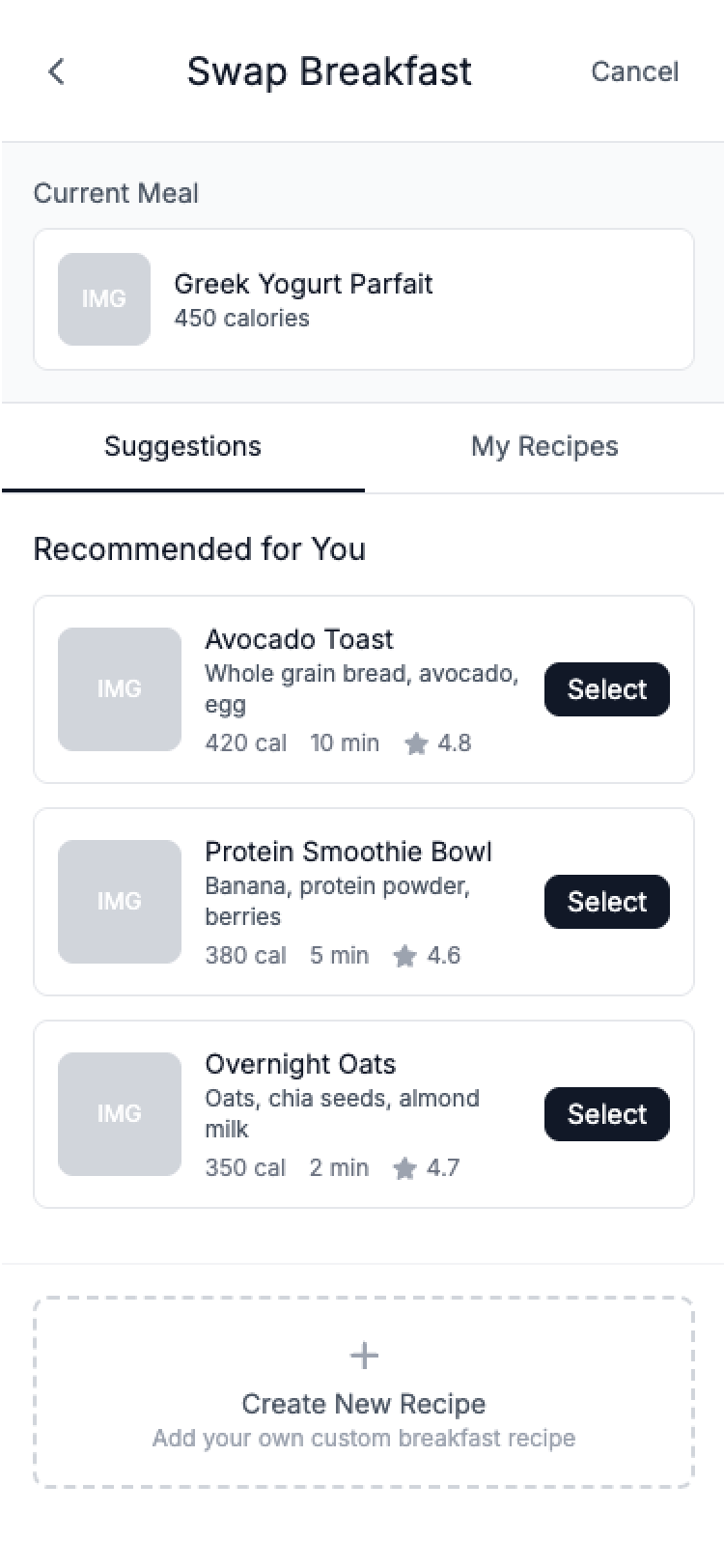
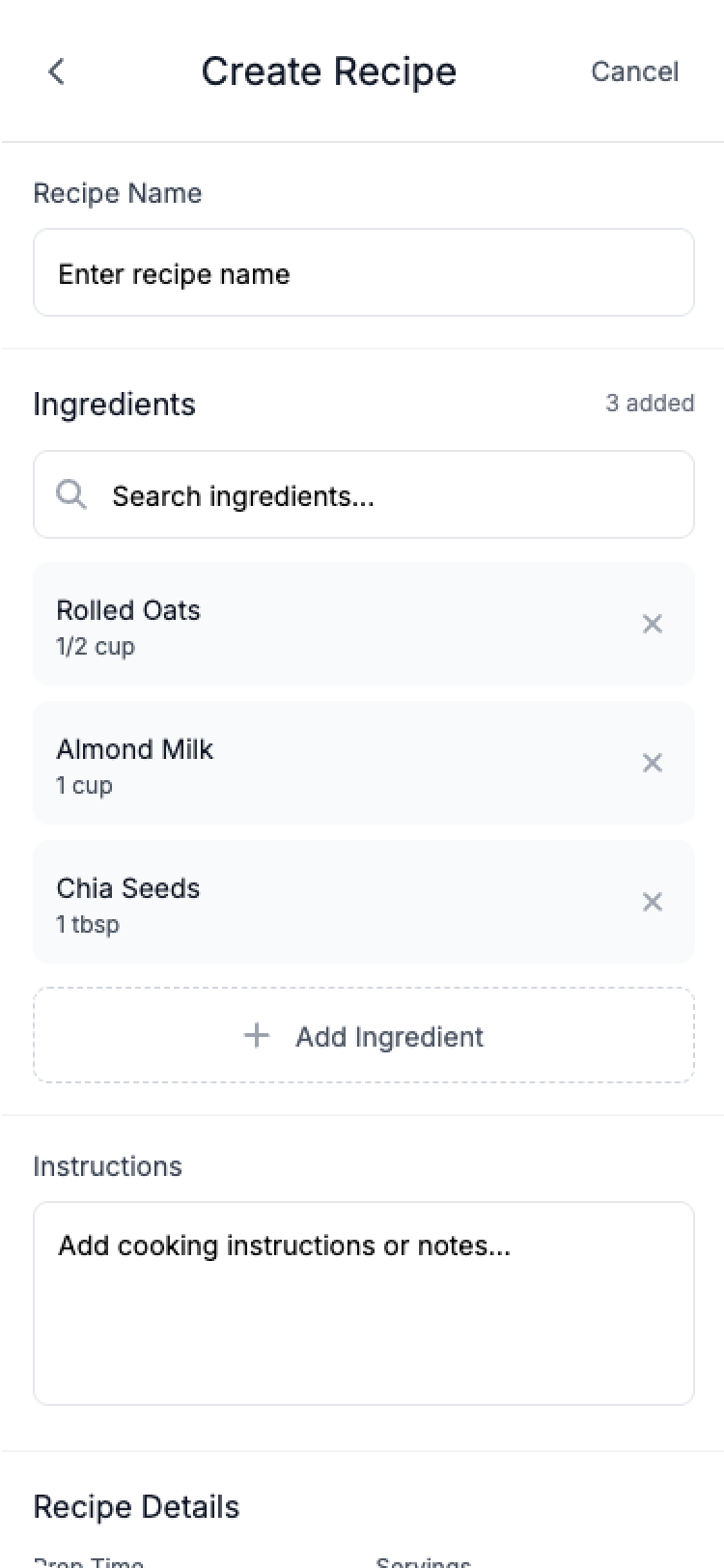
I used UXPilot for idea generation, then combined those insights with my own wireframes to apply the best UX patterns for each screen.
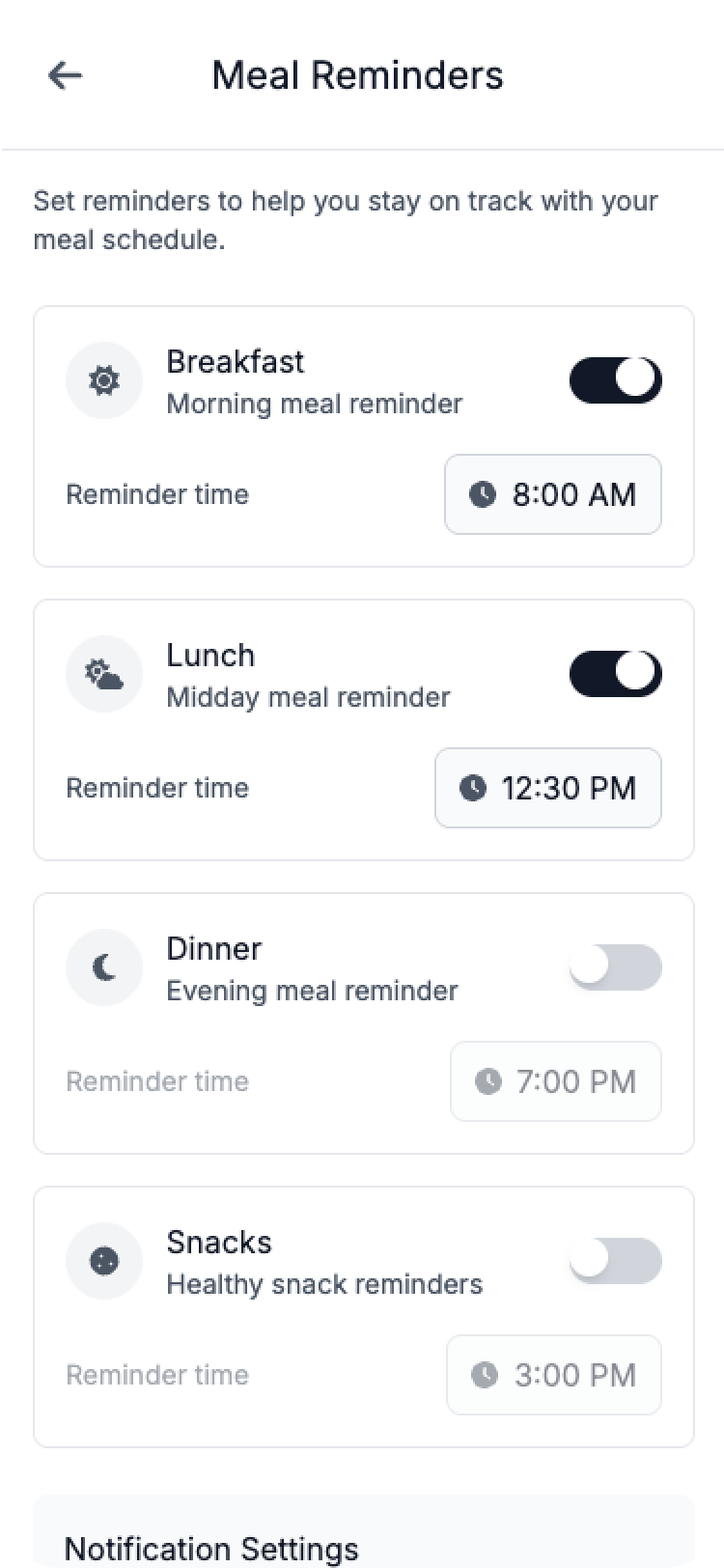
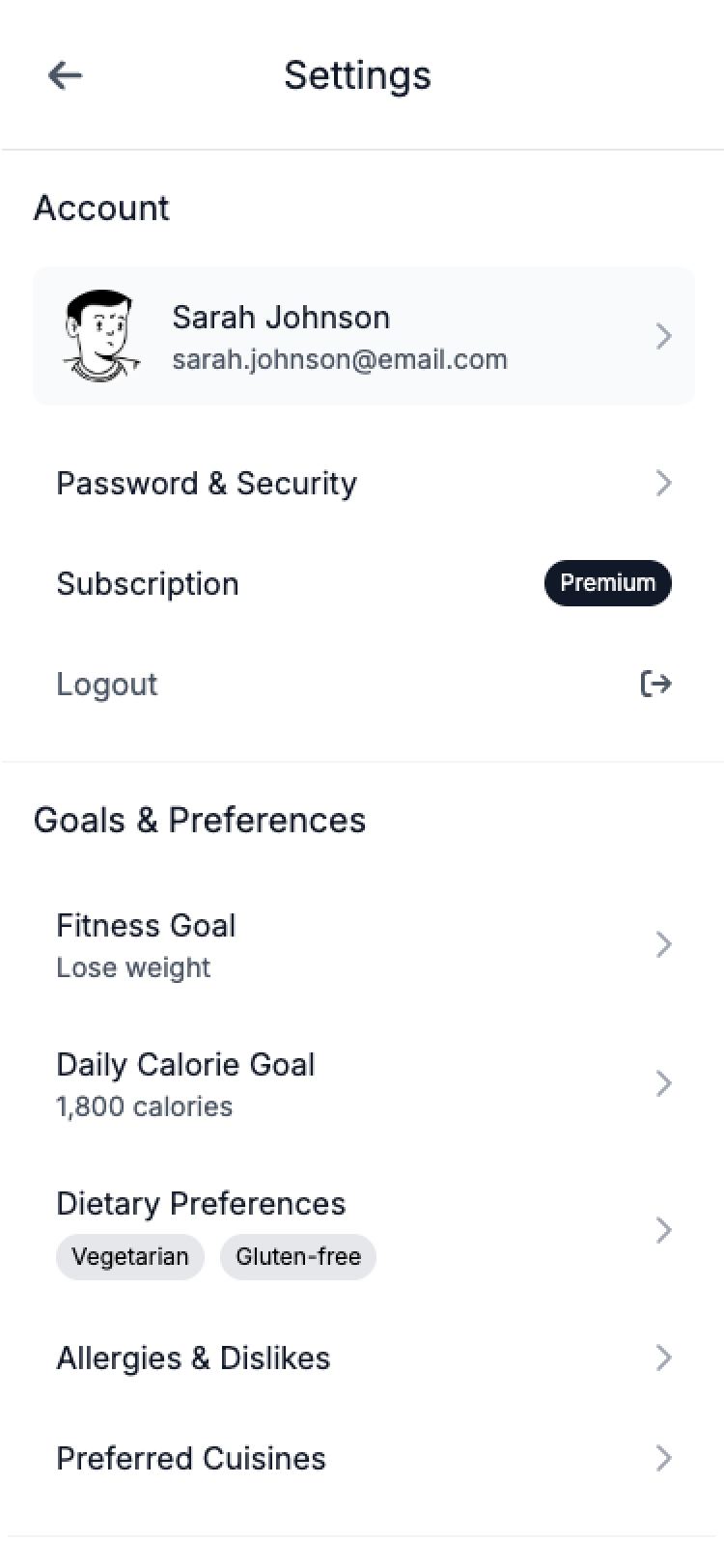
From Friction to Flow
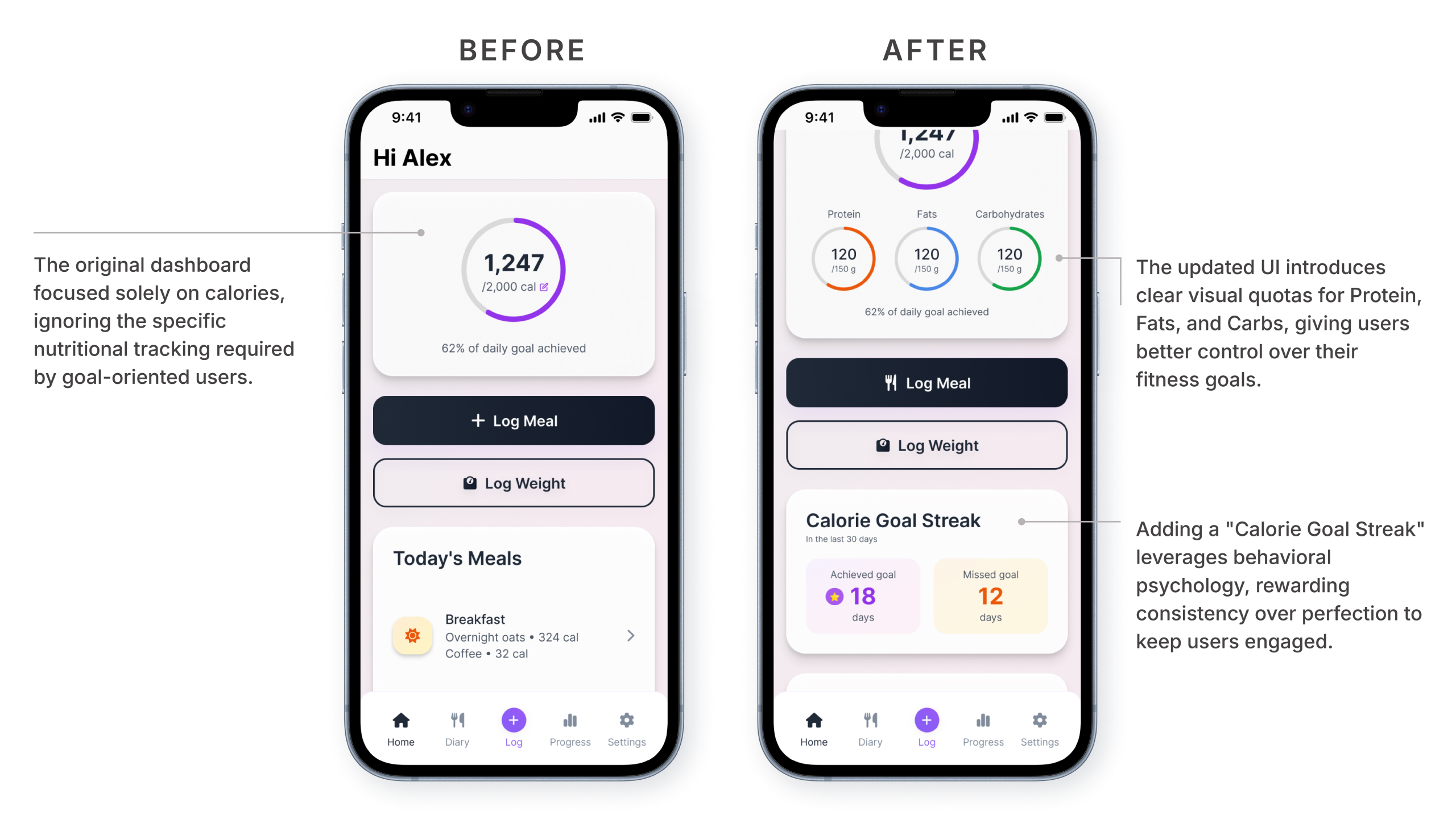
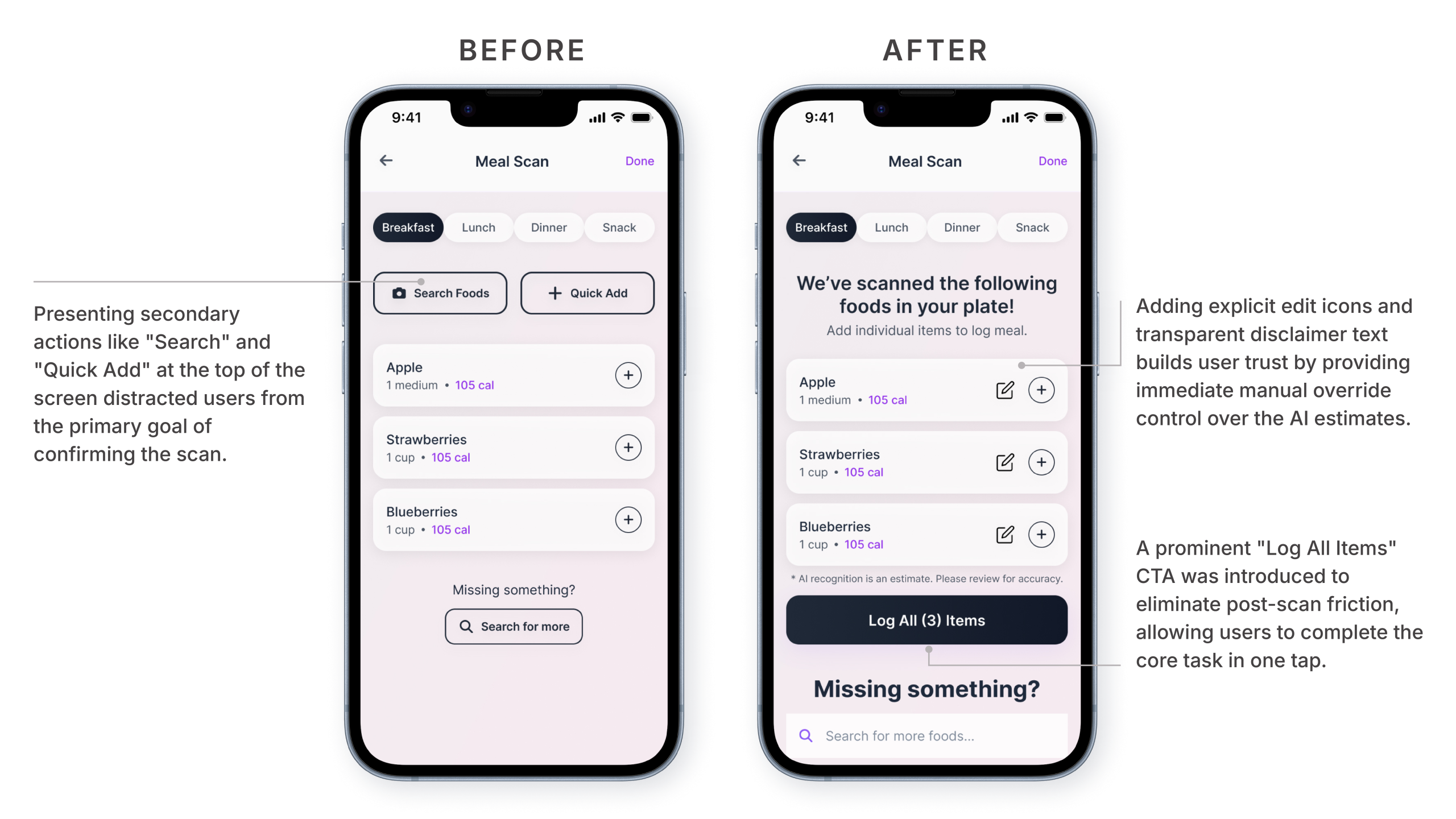
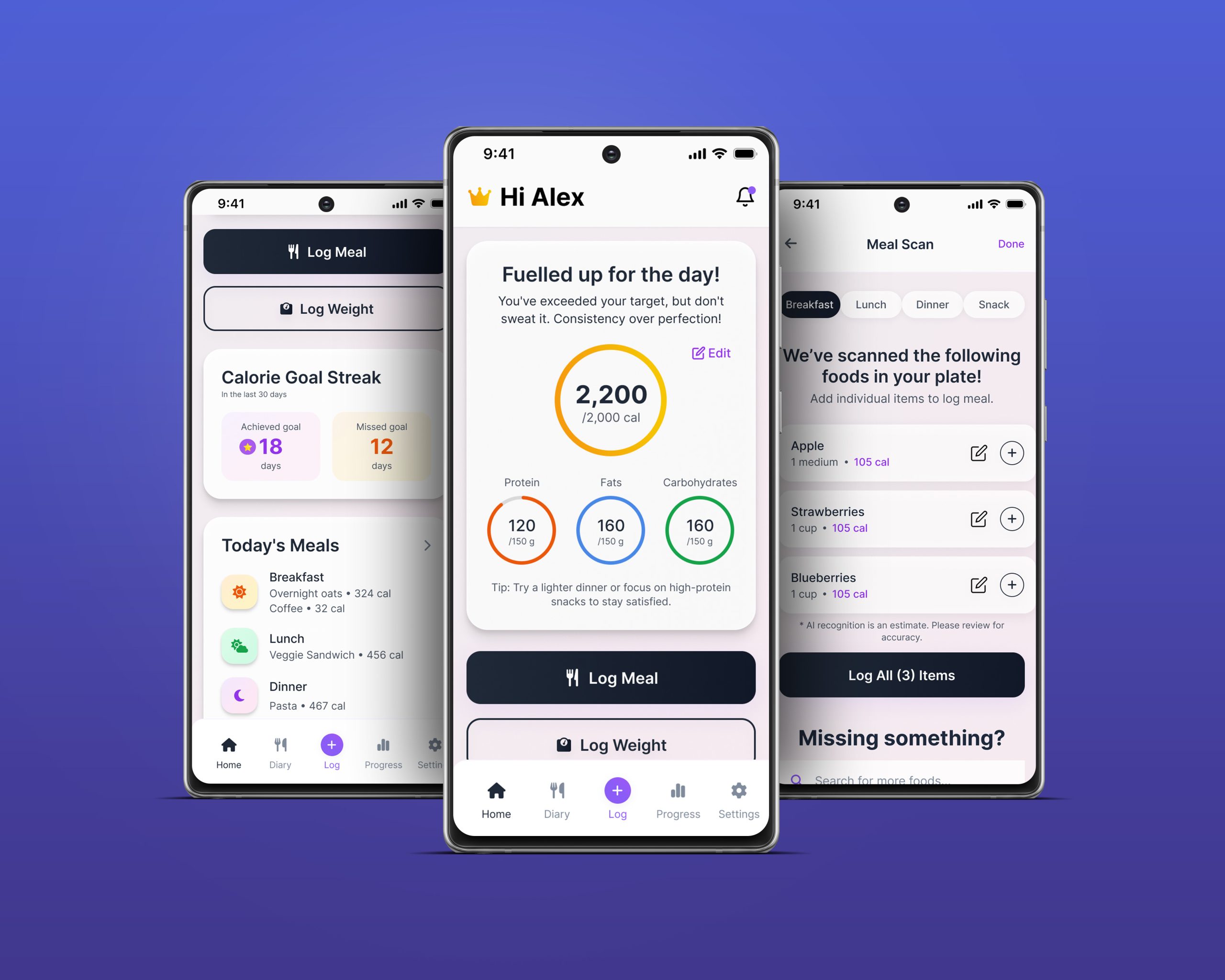
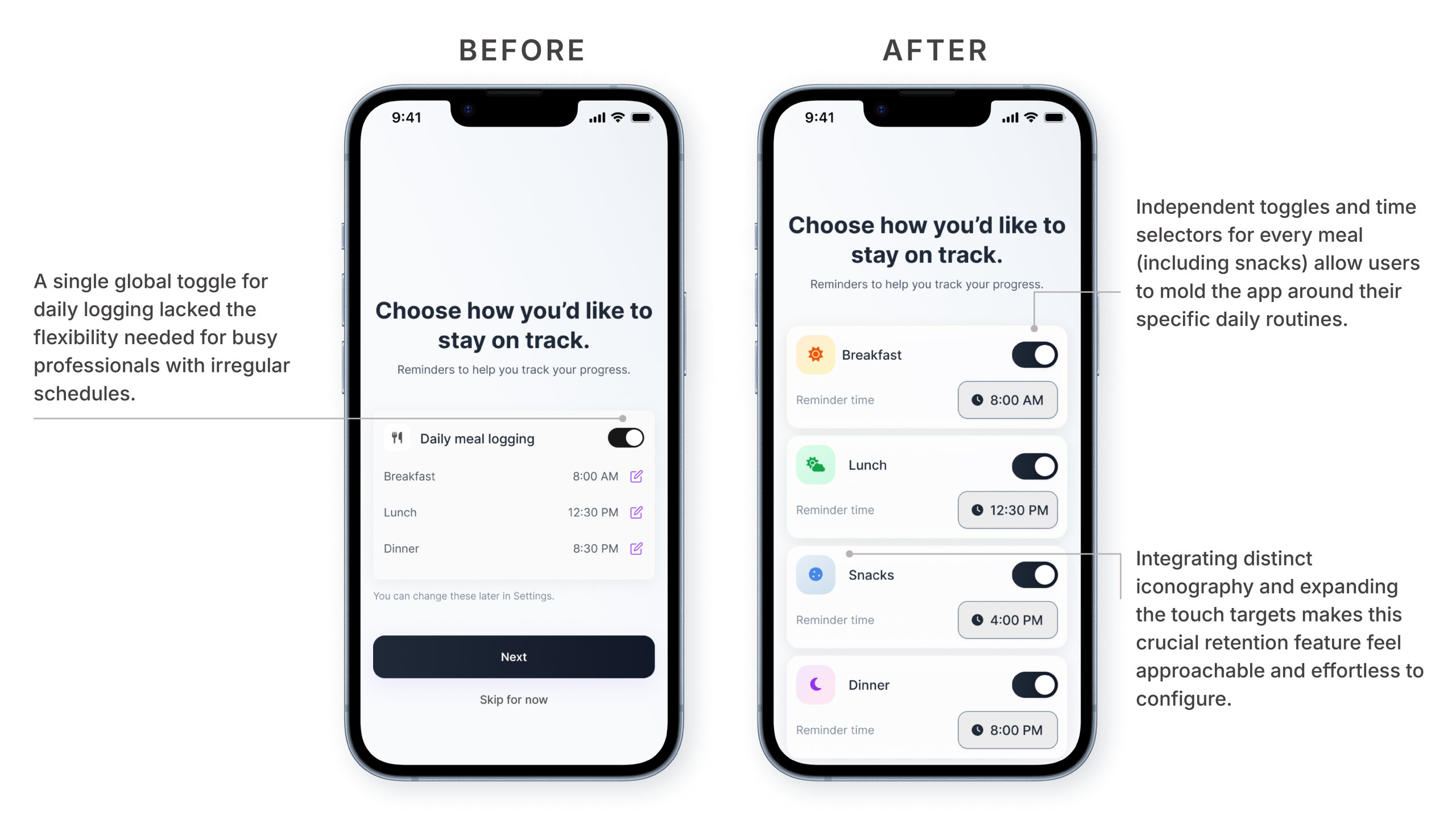
During usability testing, I uncovered critical friction points in the early designs, ranging from oversimplified metric visibility to rigid automated behaviours. Through iterative design cycles, I refactored these layouts to build a seamless, habit-forming experience that prioritises user control and cognitive clarity.
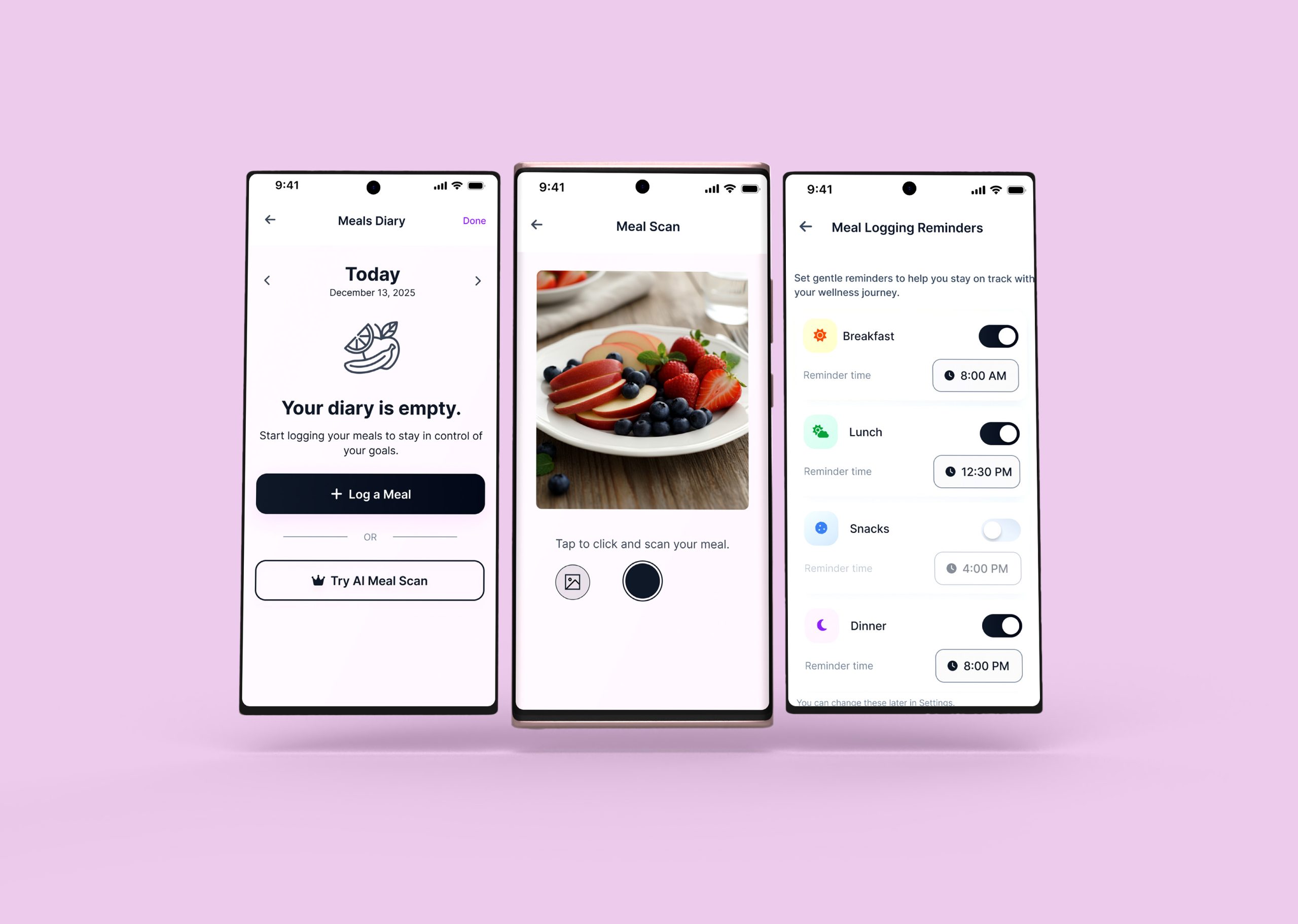
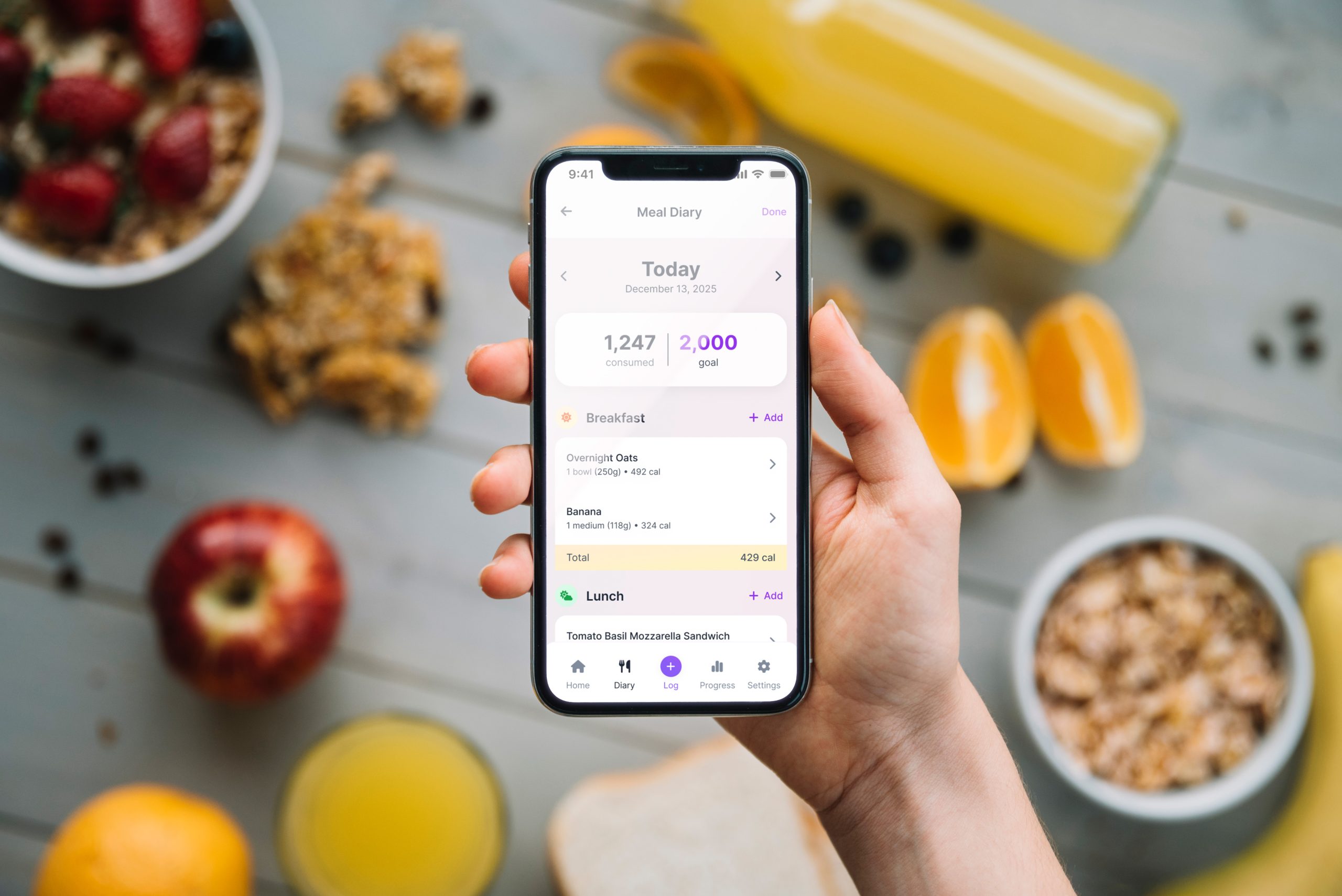
1. Calorie-Centric Dashboard → Granular Macro Quotas & Consistency Streaks
2. Distracted Action Hierarchy → High-Trust AI Verification & Single-Tap Logging
3. Rigid Global Settings → Flexible, Contextual Reminders
Success Metrics
We achieved…
78%
Task success rate for logging Indian meals via AI scanning
63%
Decrease in time taken to log a meal compared to text-search apps
4.3/5
Average AI trust rating, with manual override features
What I Learned
Designing for AI Trust: While automation reduces friction, users require transparent manual overrides to fully trust the system.
Cultural Inclusion as a Strategy: Addressing the “Indian Food Gap” proved that diverse databases are a competitive business advantage, not just a niche feature.
Strategic MVP Scoping: Deciding to phase out complex additions like automated meal planning allowed me to perfect the core logging experience for the initial launch.
Behavioral Psychology in UX: Shifting the focus from daily perfection to long-term consistency is critical for preventing user guilt and reducing churn.
Future Scope
“Pause Mode”: A feature allowing users to temporarily pause tracking during busy periods to protect their streaks and eliminate guilt.
Wearable Integration: Syncing with fitness devices like Apple Health and Fitbit to automatically log exercises and calculate net energy balance.
Metabolic Calibration: Introducing a trial-and-error learning phase to adjust daily calorie quotas based on an individual’s unique metabolism.
Smart Macro Swaps: Providing actionable, healthier food suggestions when users hit their calorie limits but miss their macro targets.
Long-Term User Investment: Developing a gamified reward system with skill-based badges and referral incentives to drive continuous engagement.